
Nuclear fuel
at the heart
of energy performance
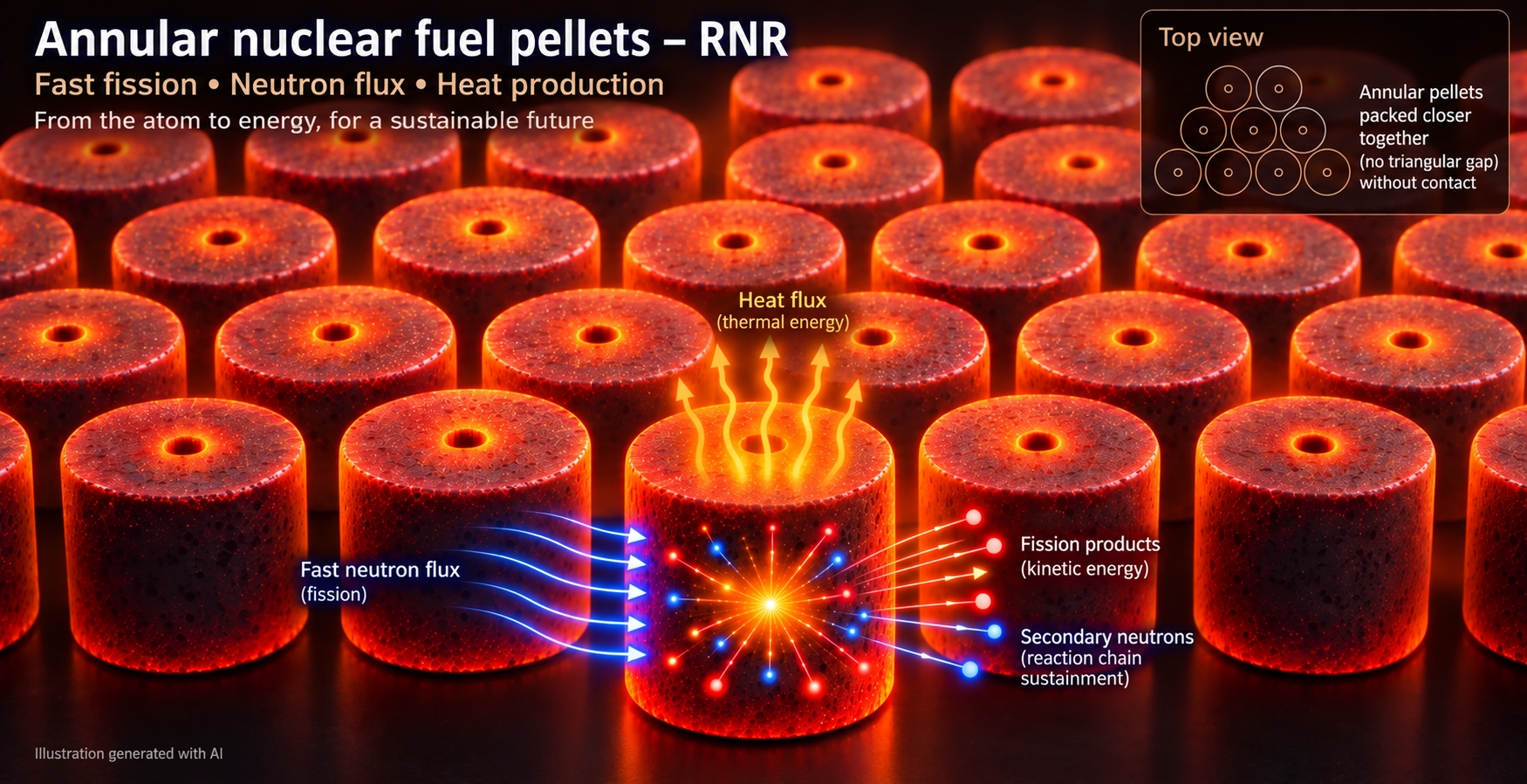
When we talk about nuclear energy, the first thing that often comes to mind is the reactor. At OTRERA, one of the keys to performance also lies in the fuel.
An approach that profoundly changes how 4th generation nuclear power is designed.
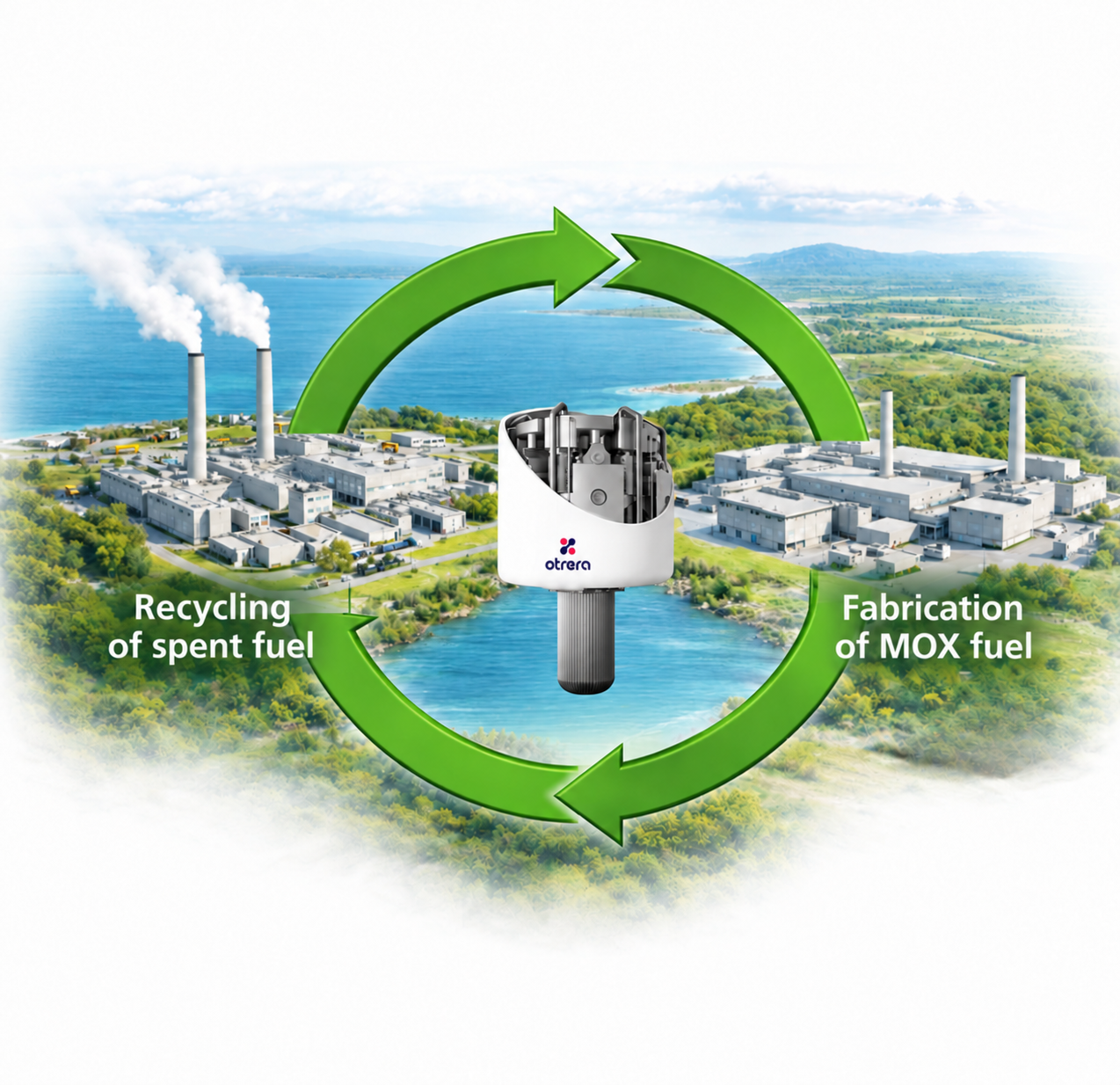
Rethinking nuclear fuel and its cycle for a competitive, sustainable and adaptable technology
Unlike fossil fuels, nuclear fuel does not burn. It produces heat through fission, which is then converted into electricity. But its role goes far beyond that: it directly determines the reactor’s performance, its safety and the management of the nuclear materials cycle.
Fuel is not just another component. At Otrera, it becomes a cornerstone of the design. Reactor, fuel and cycle are designed together from the outset, to avoid technical trade-offs and ensure the overall consistency of the system. Fuel thus becomes a genuine lever for optimization, rather than a mere adjustment variable.
The Otrera reactor is based on sodium-cooled fast reactor (SFR) technology, known in French as RNR-Na, a 4th generation technology recognized for its ability to optimize the use of nuclear fuel. This approach makes it possible to make the best use of the material recovered from spent fuel and to reduce waste production, while improving the overall efficiency of the system.
It is also about making use of the vast stock of depleted uranium available in France (300,000 t).
An industrial approach from the design stage
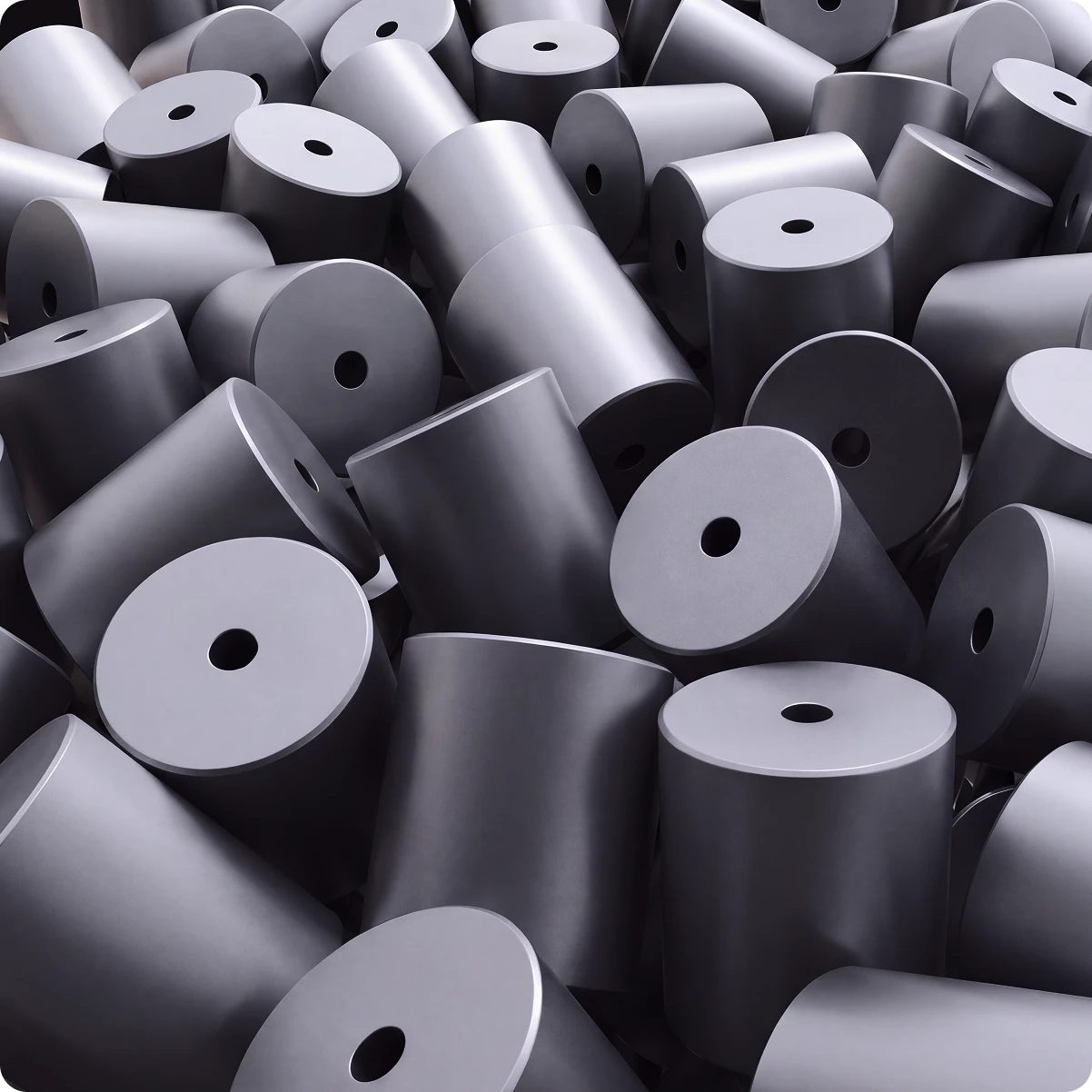
At Otrera, the fuel is designed to integrate all the requirements associated with its cycle. Its simplified design makes manufacturing easier, limits component complexity and improves the overall reliability of the system. It fits into an industrial logic compatible with existing nuclear fuel cycle infrastructure, including reprocessing, with significant savings as a result.
This approach draws on more than 60 years of operating experience from the French sodium sector. Lessons learned from past successes and limitations alike are built directly into design choices. Otrera also applies methods from other industrial sectors, such as aeronautics and automotive, integrating systems engineering, digital continuity and quality management practices.
What makes the Otrera reactor fuel unique
Simpler to manufacture than the fuel of earlier fast neutron reactors
Easier to reprocess, for better end-of-cycle management
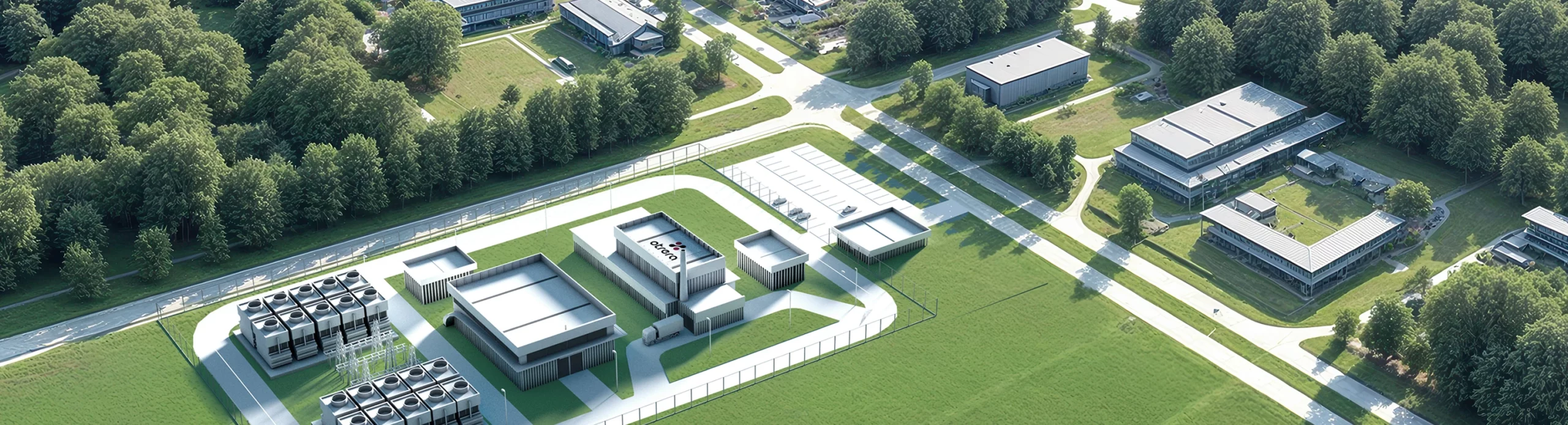
Beyond the technology,
this fuel embodies a strategic vision

Ensuring the safety and sustainability of the cycle

Strengthening energy sovereignty

Concrete applications for the energy transition
Energy for new uses and greater sovereignty
Otrera’s approach to fuel goes beyond electricity generation alone. Designed together with the reactor and its cycle, it addresses concrete needs: district heating, data centers, hydrogen production, desalination and industrial decarbonization. By making use of existing resources and reducing dependence on external supplies, it helps strengthen energy sovereignty and independence while reducing the carbon footprint.
OTRERA SIMULATOR